introduction
High Performance
Distribution Transformers
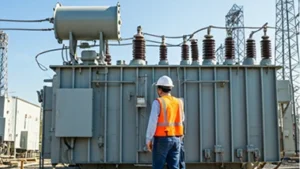
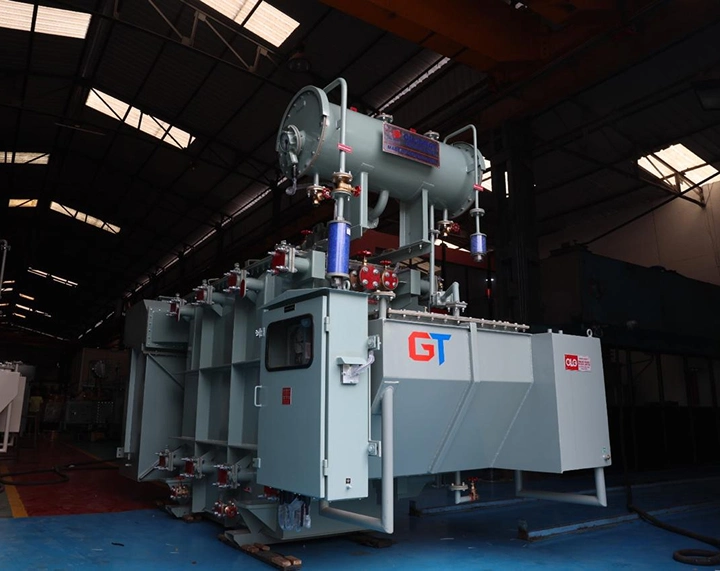
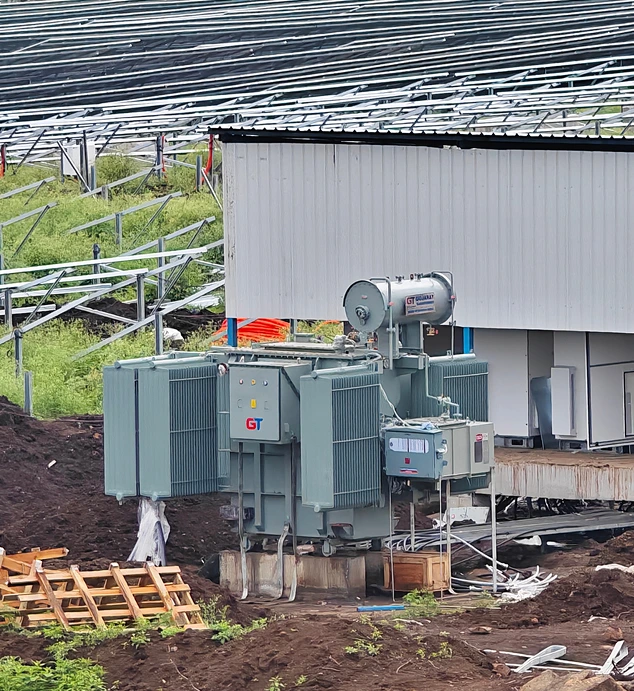
An electrical device called a distribution transformer reduces high-voltage energy from transmission lines to a level that is suitable for use in residences, workplaces, and industrial settings.
Distribution Transformers were introduced to the market 55 years ago when the city of Vadodara, Gujarat, began manufacturing them under Gujarat Transformers. It was also made to be a subtype of an isolation transformer. They function to modify voltage into a standard output of 240V/120V to be easily used in energy distribution.
Technical Specifications
| Range | 100 KVA to 5000 KVA (5 MVA) |
| Voltage Class | Up to 33 KV |
| Cooling | ONAN |
| Taping | OFF Load Tap Changer / ON Load Tap Changer |
Properties & Construction
Construction
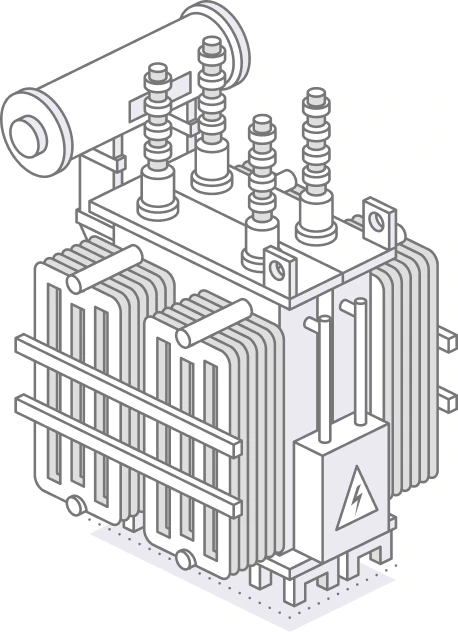
Space-efficient design ensuring reliable and durable performance.
Step-Down Operationk
Converts 33kV to a lower voltage for safe power distribution.
Cooling Radiator
Ensures heat dissipation, prevents energy loss, and maintains connectivity.
Tap Changerr
Provides 3-5 points for precise voltage regulation and control.
OilImmersed Windings
Enhances insulation, prevents overheating, and ensures efficient operation.
Conservator Tank
Manages oil expansion, maintaining system stability and performance.
Buchholz Relay
Detects internal faults early, preventing transformer failures and damage.
Silica Gel Breather
Absorbs moisture, keeping transformer oil dry and contamination-free.
Temperature Control
Thermometer and relief system safeguard against overheating damage.
Witness Engineering
Excellence In Motion

Input Connections
The primary section, electricity enters the system through them.

Output Connections
The secondary section connects the transformer with the electric instruments in use.

Winding
The primary winding draws energy for supply, and the secondary transmits it to the equipment.

Core
The path of magnetic flux eliminates heat.
Applications of
Distribution Transformers
Delivering dependable power with precision engineering, our transformers are built for maximum efficiency and long-term reliability.
Residential & Commercial Use
Voltage Step-Down
Power Distribution.
Industrial & Domestic Supply.
Renewable Energy Integration.
FAQs
How can industrial operations be made more efficient with power transformers?
Power transformers increase the efficiency of large-scale processes like manufacturing, chemical production, and power plants by ensuring steady voltage levels and lowering energy losses.
Lorem Ipsum passages, and more recently with desktop
Power transformers increase the efficiency of large-scale processes like manufacturing, chemical production, and power plants by ensuring steady voltage levels and lowering energy losses.
Lorem Ipsum passages, and more recently with desktop
Power transformers increase the efficiency of large-scale processes like manufacturing, chemical production, and power plants by ensuring steady voltage levels and lowering energy losses.
Lorem Ipsum passages, and more recently with desktop
Power transformers increase the efficiency of large-scale processes like manufacturing, chemical production, and power plants by ensuring steady voltage levels and lowering energy losses.
Lorem Ipsum passages, and more recently with desktop
Power transformers increase the efficiency of large-scale processes like manufacturing, chemical production, and power plants by ensuring steady voltage levels and lowering energy losses.
insights
Latest From Our Blogs
Hello world!
Read More
Expanding Our Footprint in 2026
Read More
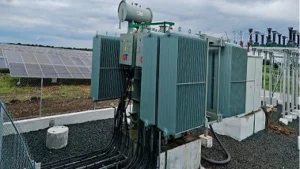
Expanding Our Footprint in 2026
Read More
The Future of Eco-Friendly Transformers
Read More

Maintenance Tips for High-Voltage Units
Read More